Do self-affirmations work? What the science says
Not the “I am confident” mantras, but the research-backed kind: a few minutes reflecting on what you value most. Here’s what the studies show, where power posing fits, and how to try it before you speak.
iPhone · 4.7 stars · Featured by Apple
What self-affirmation actually is
In psychology, self-affirmation means reflecting on a value that matters to you (your family, your creativity, your kindness) and why it matters. It comes from a theory proposed by Claude Steele in the 1980s: we're all motivated to protect our sense of being a good, capable person. When something threatens that (a big presentation, a tough interview), reminding yourself of what you stand for elsewhere makes the threat feel less total.
The point isn't to tell yourself you'll be brilliant. It's to remember that one talk going badly can't touch the things that really define you. Oddly, that makes it easier to do the talk well.
The research
What the evidence shows
Stress hormones. In a study at UCLA, 85 people either wrote about their most important value or about a value that mattered less to them. They then did a stressful lab task: giving a speech and doing mental arithmetic in front of evaluators. Those who had affirmed their values showed lower cortisol responses to the stress.
Writing about a personally important value before a stressful speaking task was followed by lower cortisol responses.
Well-being. A 2025 meta-analysis pooled 129 tests of self-affirmation exercises from published research, with 17,748 participants in total. The exercises led to small but significant improvements in how people saw themselves, in general and social well-being, and in negative symptoms like anxiety and low mood. The benefits were still there at follow-up, an average of about two weeks later.
Across 17,748 participants, self-affirmation exercises produced small, lasting improvements in well-being and reductions in anxiety and negative mood.
Amy Cuddy
Where power posing fits
You may know Amy Cuddy's TED talk on “power posing”. A 2010 study she co-authored reported that holding an expansive pose for two minutes raised testosterone, lowered cortisol and made people more willing to take risks.
Those hormone results didn't hold up. A 2015 replication with around 200 people (nearly five times the original sample) found no effect on hormones or risk-taking. In 2016 the original first author, Dana Carney, said publicly that she no longer believed the effects were real. What did replicate was smaller: people who held expansive poses reported feeling more powerful. Cuddy and colleagues have since argued that this effect on feelings is reliable.
In a larger replication, power poses changed how powerful people said they felt, but not their hormones or risk-taking.
The two ideas are different. Power posing works on the body. Self-affirmation works on what a stressful moment means to you. Standing tall won't hurt (good posture also helps your breathing), but for stress itself, values reflection has the stronger evidence.
A warning
Why “I am confident” can backfire
Repeating positive statements about yourself isn't the same as self-affirmation. In one set of experiments, people with low self-esteem who repeated “I'm a lovable person” felt worseafterwards than those who didn't. A statement that clashes with how you see yourself can remind you of the gap.
Repeating a positive self-statement helped people with high self-esteem, but made people with low self-esteem feel worse.
Values reflection avoids that trap. You aren't claiming anything you don't believe. You're reminding yourself of something you already do.
The values exercise
Based on the writing exercises used in self-affirmation studies. Do it somewhere calm, with pen and paper or your notes app.
Pick your value
Choose from a list of values the one that matters most to you.

Reflect honestly
Write for a few words about why that value is important to you and when you have followed it.
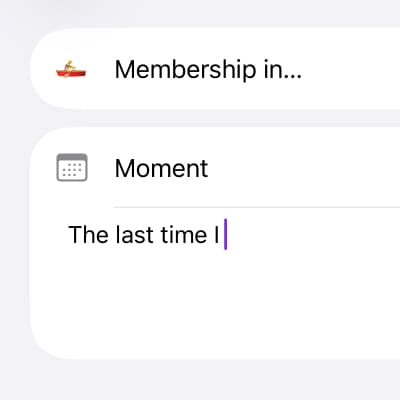
Say it to yourself
Speak and record your self-affirmation when you feel nervous about something, a meeting, a presentation...you name it.


Leila Bostic
Voice coach & speech therapist
Affirmations sit alongside the core of Astound: short breath and voice lessons that help you walk into a big moment steadier and more prepared.
Every lesson is taught on video by Leila herself. A real speech therapist and voice coach, not an AI.
“I’ve been a comedian for a while and I’m looking for ways to improve voice training is definitely making a difference and just a few simple exercises is making a huge change. Fun app!”
Common questions
Do self-affirmations actually work?
The research version, reflecting on values that matter to you, has a solid evidence base. A 2025 meta-analysis in American Psychologist pooled studies with more than 17,000 participants and found small but reliable improvements in well-being and self-perception, and reductions in anxiety and negative mood. Small is the honest word: it helps, it isn’t magic.
What’s the difference between self-affirmation and positive affirmations?
Self-affirmation in research means reflecting on your core values, such as family, kindness or creativity, and why they matter to you. Positive affirmations are mantras like “I am confident”. They aren’t the same thing, and studies have found that repeating positive statements can make people with low self-esteem feel worse.
Does self-affirmation lower cortisol?
In one well-known study (Creswell and colleagues, 2005), people who wrote about their most important value before a stressful speaking-and-arithmetic task had lower cortisol responses than people who didn’t. It’s an important finding, but it comes from a small number of lab studies, so treat it as promising rather than settled.
Is Amy Cuddy’s power posing real?
Partly. The original 2010 study reported that two minutes of expansive posing changed testosterone and cortisol. A larger 2015 replication found no hormone effects, and the original first author later said she no longer believed the effects were real. Later work suggests posture can still shift how powerful you feel. So: stand tall if it helps, but don’t expect a hormone change.
When should I do a self-affirmation exercise?
Do the full writing exercise in a calm moment, ideally a day or a few hours before something stressful. Then use the 2-minute version right before you speak.
More guides
Breathing
Breathing exercises for public speaking
Warmup
How to warm up your voice before a presentation
Warmup
Eight vocal warmup exercises for speakers
Breath control
How to stop running out of breath when speaking
Projection
How to project your voice without straining
Nerves
How to stop your voice shaking when nervous
Confidence
How to sound more confident when you speak
Your voice
Why do I hate the sound of my voice?
Research
The science of voice